If you have been researching Citrus Burn, at some point you probably wondered: what is actually inside this thing? Most supplement companies bury their ingredient list in fine print or list vague "proprietary blends" that hide real dosages. Citrus Burn does neither — and that transparency is one of the reasons it has built the reputation it has.
→ Already decided? the full Citrus Burn deep-dive →
This is a complete breakdown of every ingredient in the Citrus Burn formula: what it is, what the clinical research says it does, and why it was included.
1. Seville Orange Peel Extract (P-Synephrine) — The Core Ingredient
Want the full picture? check our full Citrus Burn review before deciding.
Reader Feedback
"Shipping to Canada was quicker than expected. About 3 weeks in I noticed my jeans fitting differently even when the scale wasn't moving much. Two months later, down 9 lbs. Really happy."
"Initially, I was a bit on the fence about the price, but after about 6 weeks I'm genuinely glad I gave it a shot. The afternoon cravings basically stopped and I dropped 11 lbs. That's not nothing."
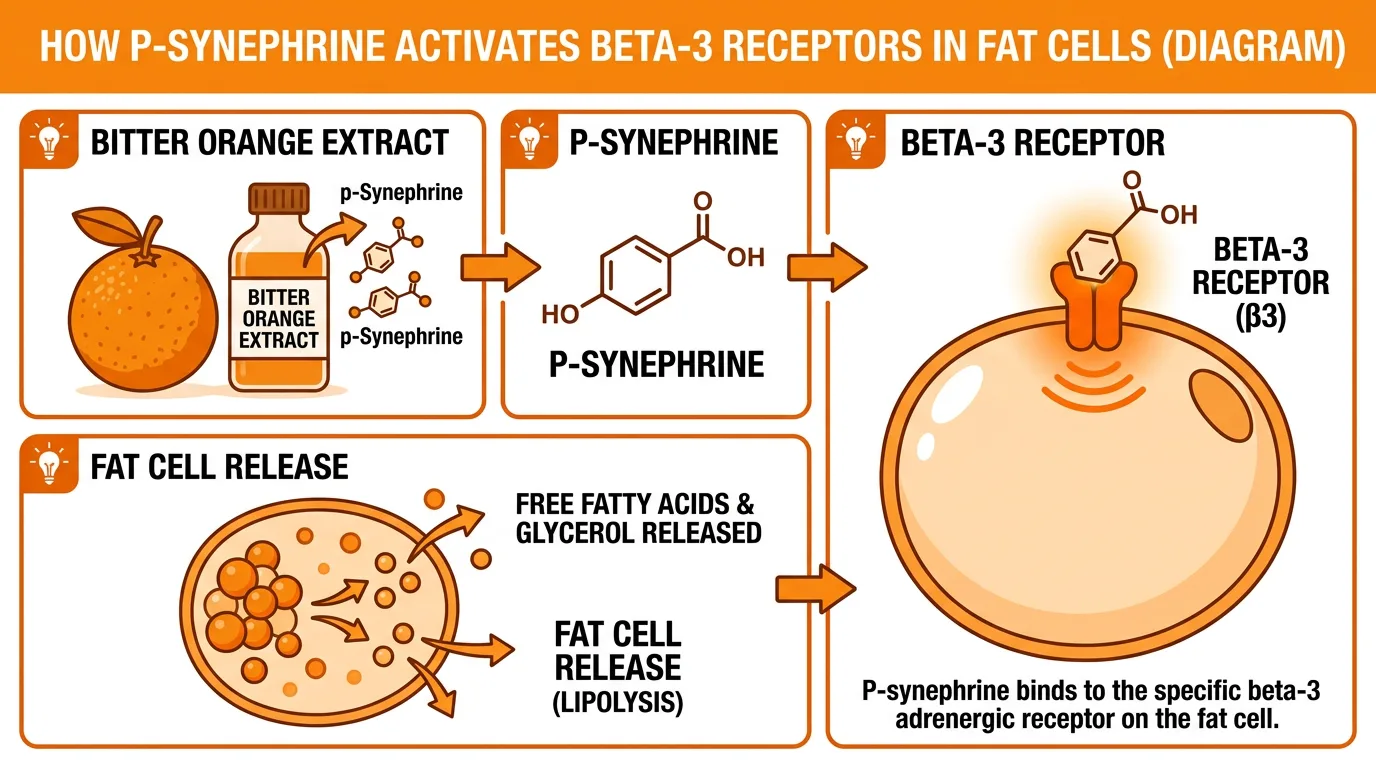
P-synephrine is a naturally occurring alkaloid found in the peel of bitter Seville oranges. It is structurally similar to ephedrine — the now-banned stimulant — but with a fundamentally different safety profile. Unlike ephedrine, p-synephrine binds selectively to beta-3 adrenergic receptors in fat cells rather than cardiac receptors. This is why it can stimulate fat oxidation without raising heart rate or blood pressure.
Research: A 2012 study in the International Journal of Medical Sciences found that p-synephrine at 50mg increased resting metabolic rate and fat oxidation without cardiovascular effects. A meta-analysis covering 23 studies confirmed these findings across different populations.
2. Andalusian Red Pepper (Capsaicin) — The Thermogenic Amplifier
Capsaicin activates TRPV1 receptors, triggering diet-induced thermogenesis — your body producing extra heat by burning more calories. A study in the Journal of Medicinal Food found capsaicin increased calorie burn by 25% in the hours after a meal. Combined with p-synephrine, it provides a second thermogenic pathway working through different receptors — creating additive fat-burning effects.
3. Ceremonial Green Tea (EGCG) — The Fat Oxidation Compound
EGCG (epigallocatechin gallate) inhibits COMT — an enzyme that breaks down norepinephrine, your body's fat-mobilizing hormone. By slowing COMT, EGCG allows norepinephrine to remain active longer, keeping fat cells in release mode for extended periods. A meta-analysis of 15 RCTs in Diabetes Care confirmed green tea catechins significantly increase fat oxidation — particularly in individuals with metabolic resistance.
4. Berberine — The Metabolic Switch
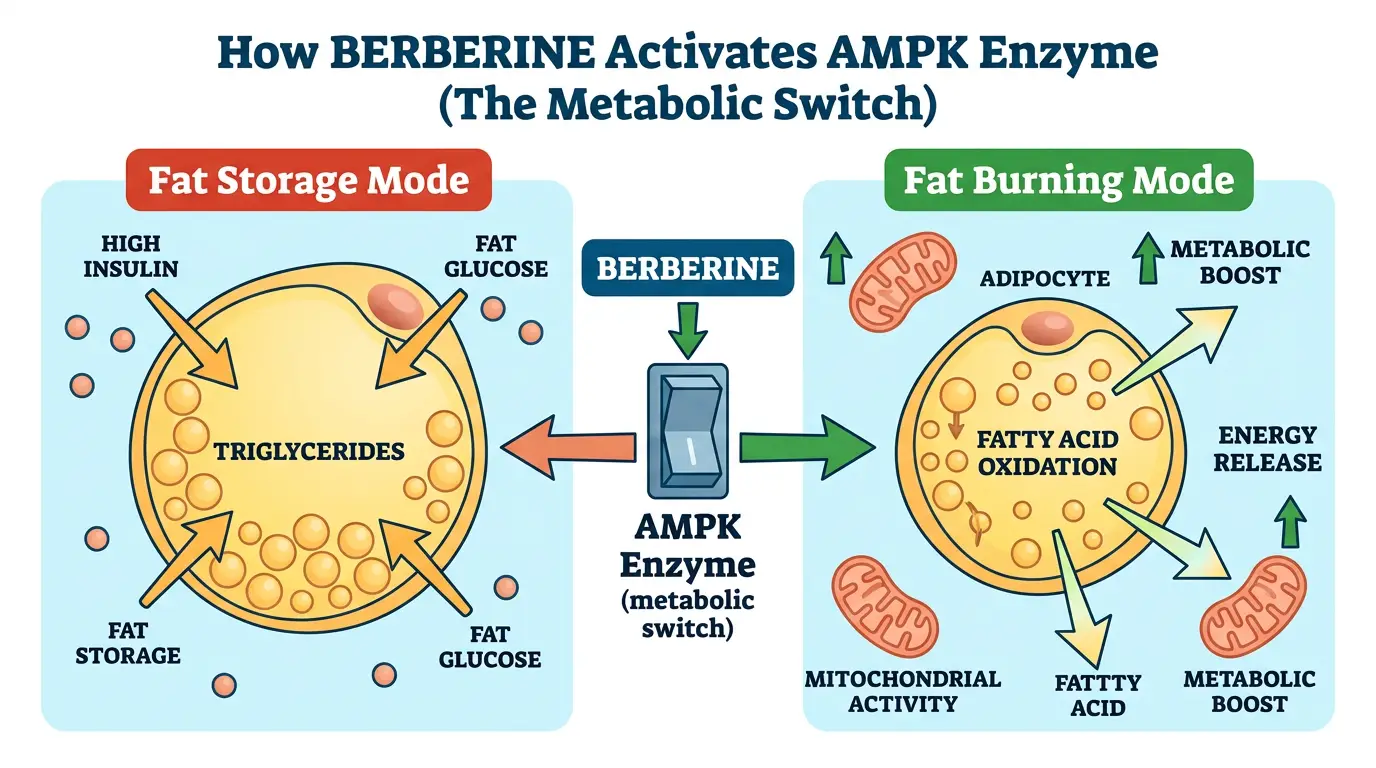
Berberine activates AMPK — adenosine monophosphate-activated protein kinase — an enzyme that functions as a cellular energy sensor. When AMPK is activated, the cell shifts from fat storage to fat burning at the genetic level. Multiple clinical trials have found berberine as effective as metformin for supporting healthy blood sugar, which matters because chronically elevated blood sugar is a primary driver of fat storage.
5. Himalayan Mountain Ginger — The Appetite Regulator
Ginger works through two pathways: thermogenic activation via TRPV1 receptors (similar to capsaicin) and appetite regulation by modulating ghrelin — the hunger hormone. A randomized trial found ginger supplementation reduced feelings of hunger by 54% compared to placebo. In another study, ginger significantly reduced ghrelin levels after meals, extending the satiety window and reducing total calorie intake.
6. Spanish Red Apple Vinegar — The Satiety Compound
Acetic acid from apple cider vinegar slows gastric emptying — food moves more slowly from the stomach, creating a longer satiety signal and reducing post-meal blood sugar spikes. A 12-week RCT found daily apple cider vinegar consumption reduced body weight, waist circumference, and visceral fat compared to placebo. Modest individually, but meaningful when stacked with the other thermogenic ingredients.
7. Korean Red Ginseng — The Adaptogen
Ginsenosides in Korean red ginseng modulate the cortisol response and support testosterone levels. In the context of weight loss, this addresses a major overlooked obstacle: chronic stress and elevated cortisol promote visceral fat storage and suppress the hormones governing fat oxidation. Ginseng helps restore the hormonal balance needed for effective fat metabolism.
📋 Want our complete analysis?
read our in-depth Citrus Burn analysis →"Okay so I've tried a LOT of these. This one actually works differently — like it doesn't feel like a stimulant, more like your body just... stops asking for snacks all the time. Down 8 lbs in 5 weeks."
Why the Seven-Ingredient Combination Works
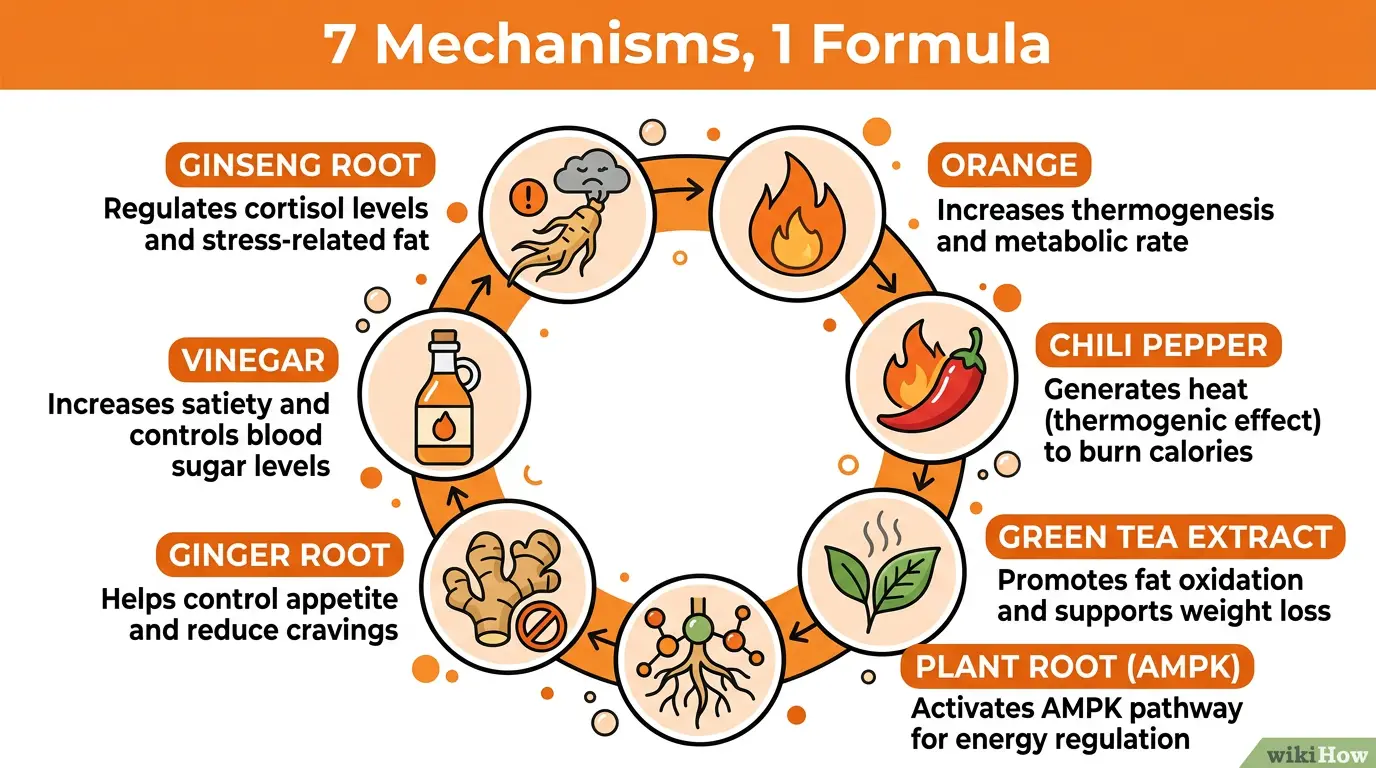
What separates Citrus Burn from single-ingredient products is the multi-pathway approach. The body adapts to single-pathway stimulation — which is why caffeine tolerance develops quickly. By targeting seven mechanisms simultaneously, Citrus Burn maintains effectiveness over weeks and months rather than losing efficacy as the body adjusts.
For a complete review including results data and safety analysis, see our full Citrus Burn review. If you are comparing thermogenic vs mitochondrial approaches, our Citrus Burn vs Mitolyn comparison covers the key differences in detail.
Ready to Try Citrus Burn?
180-day money-back guarantee — manufactured in FDA-registered, GMP-certified facility
Get Citrus Burn — Official Website →