
Millions of Americans deal with a slow metabolism without recognizing it. They blame themselves for "lacking willpower" when they can't lose weight, not realizing their metabolism itself has shifted into a lower gear — often for identifiable and correctable reasons.
A "slow metabolism" isn't a single condition. It's an umbrella term for several distinct metabolic dysfunctions, each with different underlying causes and targeted solutions. Identifying which signs you have points directly to the root cause — and the fix.
What We Mean By "Slow Metabolism"
Clinically, a "slow metabolism" refers to a resting metabolic rate (RMR) that is significantly below predicted levels for a person's age, sex, weight, and body composition. Research published in the American Journal of Clinical Nutrition estimates that up to 25% of adults have an RMR more than 15% below expected values — burning 200–400 fewer calories per day than peers with similar physical characteristics.
Reader Feedback
"This article gave me more actionable info than 6 months of scrolling TikTok. The part about cortisol and stress eating finally explained why my diet kept failing. Sharing with my sister."
"40 and metabolically confused is my new life description. This article actually makes sense of it — thank you. Bookmarked and sharing with my trainer."
This difference compounds: an RMR 200 calories below average results in approximately 20 lbs of extra weight gain per year if diet remains unchanged.
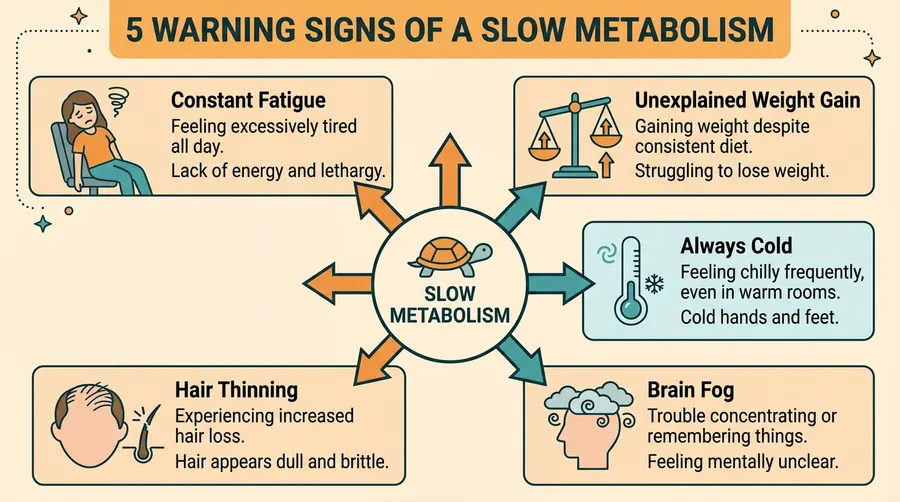
12 Signs Your Metabolism Is Running Slow
Sign 1: You Gain Weight Easily (Even With a Reasonable Diet)
If you're carefully monitoring your food intake and still gaining weight — or can't lose weight despite being in a caloric deficit — your metabolism may be actively compensating. This is called "metabolic adaptation" or "adaptive thermogenesis." When the body perceives a caloric deficit, it can reduce non-exercise movement (NEAT), lower body temperature, reduce thyroid hormone conversion, and decrease cellular energy expenditure — effectively erasing the deficit.
Fix: Implement "diet breaks" — periodic 1–2 week periods eating at maintenance calories — which research shows partially reverses metabolic adaptation. Combine with strength training to rebuild metabolic engine capacity.
Sign 2: Persistent Fatigue Despite Adequate Sleep
When mitochondria — the cellular organelles responsible for energy production — are impaired or insufficient in number, cells cannot generate adequate ATP. The result is pervasive fatigue that sleep doesn't resolve. This is distinct from regular tiredness and is often described as "bone-deep" exhaustion.
Fix: Exercise (especially HIIT) stimulates mitochondrial biogenesis. CoQ10 supplementation has demonstrated benefits for energy production in adults over 40. B vitamin optimization and magnesium are also critical mitochondrial cofactors.
Sign 3: Feeling Cold All the Time
Body heat is a primary output of metabolism. If you frequently feel cold — particularly in your hands and feet — when others around you are comfortable, your resting thermogenesis may be reduced. This often indicates hypothyroidism, but can also result from low muscle mass (muscle is a significant heat-generating tissue), iron deficiency, or calorie restriction.
Fix: Request a full thyroid panel (not just TSH, but Free T3 and Free T4). Increase muscle mass through strength training. Ensure adequate iron intake (especially important for premenopausal women). Consider warming thermogenic foods: ginger, cayenne, and warming spices.
Sign 4: Difficulty Losing Weight — or Hitting Repeated Plateaus
Repeated diet-and-rebound cycles (yo-yo dieting) progressively damage metabolic rate. Research in Obesity Reviews found that each cycle of significant weight loss followed by regain reduces metabolic rate further, as the body becomes increasingly efficient at storing energy and resistant to fat oxidation.
Fix: Break the cycle by shifting focus from calorie restriction to body composition improvement. Maintaining or gaining muscle mass through strength training can reverse the metabolic damage of yo-yo dieting over 6–12 months.
Sign 5: Frequent Headaches
Chronic low-grade dehydration is a common but overlooked metabolic suppressor. Dehydration impairs mitochondrial function, reduces thermogenesis, and decreases blood flow to the brain — causing headaches. Research shows even mild dehydration (1–2% body weight) reduces resting metabolic rate measurably.
Fix: Drink 8–10 cups (64–80 oz) of water daily. Start each morning with 16 oz before coffee. Add electrolytes if you exercise intensely or sweat heavily.
Sign 6: Constant Hunger and Strong Carbohydrate Cravings
When the body is metabolically resistant (unable to efficiently burn fat for fuel), it relies heavily on glucose for energy. This creates frequent hunger and intense carbohydrate cravings, particularly in the afternoon. Insulin resistance — a key metabolic dysfunction — impairs fat burning and causes the body to prioritize glucose while craving constant refueling.
Fix: Berberine supplementation (500mg twice daily with meals) has shown results comparable to metformin for improving insulin sensitivity. Reducing refined carbohydrate intake, increasing protein, and adding resistance training all improve glucose metabolism and reduce carb-driven hunger.
Sign 7: Brain Fog and Poor Concentration
The brain consumes approximately 20% of your body's energy despite being only 2% of body weight. Mitochondrial dysfunction affects the brain disproportionately — neurons are among the most energy-demanding cells in the body. Research published in Nature Reviews Neuroscience links poor mitochondrial function to cognitive decline, brain fog, and reduced mental clarity.
Fix: Omega-3 fatty acids (particularly DHA) are essential for neuronal mitochondrial function. MCT oil provides an alternative fuel (ketones) that bypasses impaired glucose metabolism. Exercise increases brain-derived neurotrophic factor (BDNF), which supports neural energy metabolism.
Sign 8: Dry Skin, Brittle Nails, and Hair Loss
Thyroid hormones regulate metabolic rate throughout the body — including skin cell turnover, nail growth, and hair follicle cycling. Hypothyroidism (underactive thyroid) is one of the most common causes of genuinely slow metabolism, affecting an estimated 4.6% of Americans — with many more undiagnosed.
Fix: Request a comprehensive thyroid panel from your doctor. Even subclinical hypothyroidism (TSH above 3.0) can cause meaningful metabolic suppression. Iodine and selenium are essential cofactors for thyroid hormone production.
Sign 9: Irregular or Absent Menstrual Cycles
For women, metabolic rate is closely linked to reproductive hormonal function. Both hypothyroidism and undereating (particularly low-fat diets) can suppress LH and FSH — the hormones that regulate the menstrual cycle. This creates a chicken-and-egg scenario: metabolic dysfunction disrupts hormones, and hormonal disruption further suppresses metabolism.
Fix: Ensure adequate caloric and fat intake. Hormonal health requires dietary fat (cholesterol is the precursor to all sex hormones). Cortisol management is equally important — chronic stress directly suppresses reproductive hormones.
Sign 10: Low Motivation and Mild Depression
Mitochondrial dysfunction has been linked to mood disorders in multiple studies. Research published in the Journal of Affective Disorders found significantly impaired mitochondrial function in patients with major depression. The connection is bidirectional: low cellular energy impairs neurotransmitter synthesis, while stress and depression generate reactive oxygen species that damage mitochondria.
Fix: Regular exercise is the most evidence-based intervention for both mitochondrial function and mood regulation. Vitamin D optimization (common deficiency in the US) supports both metabolic and mood function. Omega-3 supplementation has demonstrated antidepressant effects in multiple clinical trials.
Sign 11: Difficulty Waking Up and Needing Multiple Alarms
Morning cortisol should naturally spike at wake time — this is what creates the energy to start the day. Blunted morning cortisol (a pattern seen in HPA axis dysregulation from chronic stress or poor sleep) means the body can't efficiently mobilize energy at wake time. This creates morning grogginess that persists for hours.
Fix: Morning light exposure (10–30 minutes of natural daylight within the first hour of waking) is the most powerful reset for cortisol rhythm. Avoid hitting snooze — fragmented sleep worsens HPA dysregulation. Adaptogenic herbs (ashwagandha, rhodiola) show clinical evidence for normalizing cortisol patterns.
Sign 12: Slow Wound Healing
Cellular repair is extraordinarily energy-intensive. If your metabolism is compromised, the body prioritizes essential functions over repair processes — slowing wound healing, recovery from exercise, and tissue regeneration. Chronic high blood sugar (often accompanying metabolic dysfunction) further impairs healing by damaging small blood vessels and impairing immune cell function.
Fix: Optimize protein intake (collagen synthesis requires adequate dietary protein). Vitamin C, zinc, and vitamin A are critical cofactors for wound healing. Maintaining stable blood sugar reduces the healing-impairing effects of hyperglycemia.

"The thermogenesis section was genuinely eye-opening. I always thought 'metabolism boost' was marketing fluff. The actual science is more interesting. Great breakdown."
When to See a Doctor
If you experience five or more of these signs, a comprehensive metabolic workup is warranted. Ask your doctor for:
- Full thyroid panel: TSH, Free T3, Free T4, Reverse T3, TPO antibodies
- Fasting insulin and glucose (insulin resistance is often present for years before blood sugar elevates)
- Comprehensive metabolic panel (CMP)
- Vitamin D, B12, iron/ferritin levels
- HbA1c (3-month blood sugar average)
Many metabolic conditions are easily treated once identified — yet can silently suppress metabolism for years when undiagnosed.