
You can follow a perfect diet and exercise consistently, but if you're chronically sleep-deprived, your weight loss efforts are being systematically undermined at the hormonal level. Research shows that insufficient sleep doesn't just make you tired — it fundamentally rewires your metabolism, appetite, and fat-burning capacity in ways that make weight gain nearly inevitable.
This is not a minor consideration. Understanding the sleep-weight connection may be the most important insight for the millions of Americans who struggle with weight despite "doing everything right."
The Hormonal Cascade of Sleep Deprivation
Ghrelin and Leptin: The Hunger Hormone Disaster
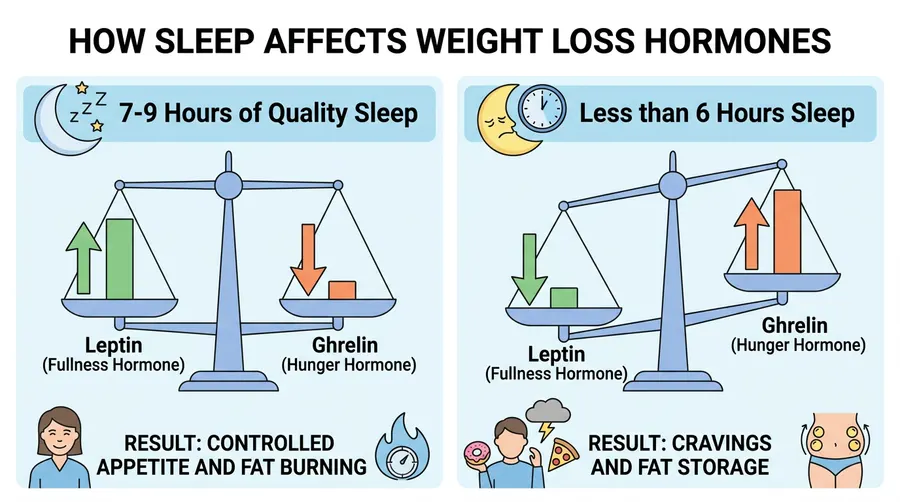
Sleep regulates two critical appetite-controlling hormones: ghrelin (the hunger-stimulating hormone) and leptin (the satiety hormone). Research published in the Public Library of Science Medicine by researchers at the University of Wisconsin found that just one week of insufficient sleep (less than 6 hours per night) produced dramatic hormonal shifts:
Reader Feedback
"40 and metabolically confused is my new life description. This article actually makes sense of it — thank you. Bookmarked and sharing with my trainer."
"The thermogenesis section was genuinely eye-opening. I always thought 'metabolism boost' was marketing fluff. The actual science is more interesting. Great breakdown."
- Ghrelin increased by 14.9% — causing significantly increased hunger, particularly for calorie-dense foods
- Leptin decreased by 15.5% — reducing the body's ability to recognize fullness
The combined effect: sleep-deprived individuals consumed an average of 385 extra calories per day — primarily from high-fat, high-sugar foods — driven entirely by hormonal changes, not lack of willpower.
Cortisol and Insulin Resistance
Sleep deprivation activates the stress response, elevating cortisol throughout the day. Chronically elevated cortisol has several metabolic consequences: it promotes fat storage (particularly visceral fat), stimulates gluconeogenesis (glucose production from muscle protein), impairs insulin sensitivity, and suppresses growth hormone release during the night — a hormone critical for fat burning and muscle maintenance.
Research published in Sleep Medicine found that adults sleeping fewer than 6 hours per night had a 4.5x higher rate of obesity compared to those sleeping 7–9 hours, independent of other lifestyle factors.
How Sleep Directly Impairs Fat Burning
A landmark study from the Annals of Internal Medicine published by researchers at the University of Chicago examined what happens to weight loss when sleep is restricted. Participants followed a calorie-restricted diet under two conditions: adequate sleep (8.5 hours per night) and sleep restriction (5.5 hours per night).
Results were striking: sleep-restricted participants lost 55% less fat and 60% more muscle mass during the same period of calorie restriction — despite eating the same number of calories. The researchers concluded that sleep is a critical modulator of which fuel (fat vs. muscle) the body burns during a caloric deficit.
The mechanism: adequate sleep optimizes growth hormone pulsatility (most GH is released during deep sleep), which specifically promotes fat mobilization and muscle protein preservation. Sleep deprivation reverses this — the body burns muscle preferentially and preserves fat.
Sleep Deprivation and Food Choices
Beyond caloric quantity, sleep deprivation changes food quality preferences. Research from UC Berkeley using fMRI imaging found that sleep-deprived individuals showed significantly stronger activation in the brain's reward centers in response to high-calorie foods — and significantly weaker activation in the prefrontal cortex (the region governing self-control).
In practical terms: sleep deprivation makes junk food appear more rewarding while simultaneously reducing the cognitive resources needed to resist it. This explains why the 11pm kitchen raid feels so compelling after a sleepless night — it's neurological, not character failure.
The Metabolic Clock: Why Sleep Timing Matters
Research in circadian biology has revealed that when you sleep matters as much as how long. The body's circadian rhythm regulates the timing of metabolic processes including insulin secretion, fat oxidation, cortisol release, and appetite hormone patterns.
A study published in Current Biology found that people who are "social jet-lagged" — their sleep timing on weekends differs by 2+ hours from weekdays — have significantly higher rates of metabolic syndrome and obesity, even when total sleep hours are adequate. The circadian disruption alone produces metabolic consequences independent of total sleep quantity.

How Much Sleep Do You Actually Need for Metabolic Health?
The National Sleep Foundation's consensus recommendations based on research evidence:
- Adults 18–64: 7–9 hours per night (fewer than 6 hours consistently is associated with obesity, diabetes, and cardiovascular disease)
- Adults 65+: 7–8 hours per night
Importantly, "catching up" on sleep on weekends does not fully reverse the metabolic damage of weekday sleep restriction. Research in Current Biology found that weekend sleep recovery partially restores performance but does not normalize the metabolic disruptions caused by insufficient weekday sleep.
Evidence-Based Strategies to Improve Sleep Quality
Sleep Architecture Optimization
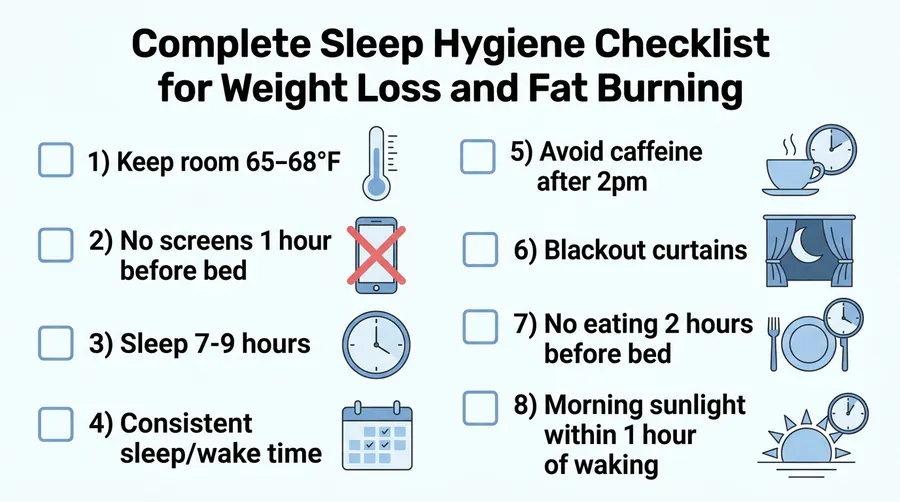
Maintain a consistent sleep schedule: Going to bed and waking at the same time every day — including weekends — is the most powerful intervention for circadian rhythm regulation. Research shows that consistent sleep timing improves sleep quality even when total hours remain the same.
Temperature management: Core body temperature must drop 1–2°F to initiate sleep. A bedroom temperature of 65–68°F (18–20°C) is optimal. A warm shower 1–2 hours before bed accelerates this temperature drop through peripheral vasodilation.
Light management: Blue-wavelength light (from screens, LED lighting) suppresses melatonin synthesis. Research from Harvard's Division of Sleep Medicine found that 2 hours of iPad use before bed reduces melatonin by 22% and delays sleep onset by 10 minutes. Blue-light blocking glasses in the evening or switching to dim, amber lighting 2 hours before bed meaningfully improves sleep onset.
Nutritional Sleep Support
Magnesium glycinate: Magnesium is required for GABA neurotransmitter function (the brain's primary inhibitory signal). Research shows 400mg magnesium glycinate at bedtime improves sleep onset, sleep quality, and morning cortisol awakening response.
Tart cherry juice: A natural source of melatonin and anti-inflammatory compounds. Two studies published in the European Journal of Nutrition found tart cherry juice increased total sleep time by 34–84 minutes and improved sleep efficiency.
Avoid alcohol within 3 hours of bed: While alcohol may help sleep onset, it dramatically reduces REM sleep quality and increases sleep fragmentation in the second half of the night — reducing growth hormone pulsatility and metabolic recovery.
"This article gave me more actionable info than 6 months of scrolling TikTok. The part about cortisol and stress eating finally explained why my diet kept failing. Sharing with my sister."
The Bottom Line
Sleep is not optional for metabolic health — it's foundational. For anyone struggling with weight loss, fatigue, or metabolic issues, sleep optimization should be addressed before or alongside dietary and exercise changes. For those already addressing sleep, our guide on boosting metabolism after 40 outlines the complete protocol. And if you recognize multiple symptoms from this article, check the 12 warning signs of slow metabolism to understand the full picture. The research is clear: seven to nine hours of quality sleep per night is a non-negotiable component of any effective weight management strategy.